Coconut Pheasant Soup

”All really wild scenery is attractive. The true hunter, the true lover of wilderness, loves all parts of the wilderness, just as the true lover of nature loves all seasons. There is no season of the year when the country is not more attractive than…

”All really wild scenery is attractive. The true hunter, the true lover of wilderness, loves all parts of the wilderness, just as the true lover of nature loves all seasons. There is no season of the year when the country is not more attractive than the city; and there is no portion of the wilderness, where game is found, in which it is not a keen pleasure to hunt.” ~ Theodore Roosevelt

Cooking is a continuous learning process, and working with wild game is no exception.  For me, I tend to focus on building harmonious flavor profiles, and concentrating on that one area takes up more time than I have in a day.  However, there are hundreds of aspects in the cooking process that can all be developed, modified, re-evaluated, and maybe even re-invented.  I try to break myself of solely focusing on flavor medleys and try to improve and learn in different areas.  This recipe, coconut pheasant soup, allowed me to not only work on creating a great flavor profile, but also forced me to look at how textures work together, which is equally important in a dish's presentation.

I find pheasant meat to have a unique texture.  Many people compare pheasant to chicken.  I don't think the comparison is accurate when describing pheasant.  Pheasant, like chicken, is a mild flavored meat.  Some meats have very strong and distinct flavors, and working with them can be challenging because they fight with other flavors.  Pheasant is not like that and can be incorporated into a large number of dishes acting as a base for building flavor.

Where I think pheasant differs from chicken is the texture of the meat.  Pheasant is a bit more tough than chicken, which I am sure comes from the differences in how pheasant and chickens live and also how they eat.  Pheasant meat is a bit darker and much leaner than chicken also.  This difference can best be captured by simply pan frying a chicken breast and pheasant breast and comparing the two.  The chicken breast will be moist and light, because of the extra fat in the meat.  The pheasant will be tougher and much drier.  Because pheasant meat can dry out so quickly when cooked, it is commonly marinated, cooked low and slow, or even wrapped in a fat source, such as bacon, to create moisture and tenderness.

CoconutPheasantSoupIngredients.jpg

I find myself making a lot of meatball recipes because I think the slight toughness that develops when quickly cooking pheasant works well in meatball form.  However, after making a few meatball recipes, I decided that I wanted to try something else with the breast meat.  I am a big fan of Thai food, and especially a hot cup of tom kha gai.  A coconut based soup, tom kha gai is a spicy soup found in Thai and Lao cuisines.  Traditionally, it is prepared using galangal, kaffir lime leaves, lemon grass, thai chili peppers, mushrooms, and fish sauce.  While chicken is the main protein source for the soup, many restaurants also offer shrimp or tofu options.  Besides having a deliciously sweet and spicy broth, one of my favorite attributes of tom kha gai is how it uses textures to enhance the soup.  The mushrooms are soft and tender, while the chicken, since it is boiled, has a meatier, tougher texture.  A little crunch can also be added with a sprinkling of green onions.  The broth is very thin and silky.

The last time I had tom kha gai, I made a mental note to try and create a version at home using pheasant, since pheasant has that meatier texture that I love in the soup.  So, here the recipe is! And I found it to be a great use of my pheasant.

To a large stock pot, add a tablespoon of cooking oil and heat over medium heat.   I used coconut oil for my cooking oil, but you could use vegetable, canola, olive, or whatever oil you prefer.  Add in the minced garlic, lemon grass, and grated ginger root.  Heat for two minutes, being careful not to burn the garlic.  If the garlic starts to brown, turn the heat down.  There are three different options for the lemon grass with this soup.  I used two tablespoons of lemon grass paste, which is found by the fresh herbs in a tube.  You could also use a stalk of fresh lemon grass.  The stalk can either be added whole to the soup and removed at the end, or you could mince it up and leave it in the soup.  The paste or minced stalk both add a bit of crunch to the soup, which some people may not like.  If you do not want the bits of crunchy lemon grass, I would suggest just adding the stalk.  I like the crunch, so I went with the paste.  It is really a personal preference on textures, so go with whatever method you find most appealing.

CoconutPheasantSoupCurryPaste.jpg
CoconutPheasantSoupBase.jpg

To the garlic and ginger, add one tablespoons of red curry paste.  Stir and coat everything with the paste.  Once incorporated, add a cup of the pheasant stock and dissolve any leftover chunks of the paste.  You also want to break up any thing sticking to the bottom of the pot, as this will add even more flavor to the soup base.  For the stock of this soup, I used homemade pheasant stock.  The recipe for it can be found here: Homemade Pheasant Stock.  You could also use chicken or vegetable stock.

Once the red curry is fully dissolved, add the rest of the pheasant stock, three tablespoons of fish sauce, and a tablespoon of honey.  If you don't have honey on hand, any sweetener of your choice will do, such as brown or white sugar.  Stir everything and bring to a light boil.  Once the soup base reaches a slow, rolling boil, reduce the heat to a simmer and allow to cook for twenty minutes.  This will reduce the soup base down and concentrate the flavors of the lemon grass, ginger, and red curry.  The lemon grass, which is a culinary herb commonly found in Asian style cuisines, adds a subtle citrus flavor to the soup while the ginger gives a spicy, fresh crisp flavor, and the red curry adds a hint of heat.

After the twenty minutes, bring the heat back to medium and add the three cans of coconut milk.  The milk will create the smooth and silky texture found in the soup, and you can adjust how creamy you want the soup to be based on which coconut milk combination you use.  I used two cans of full fat coconut milk and one can of lite.  You could do three full fat, all three lite, or a combination of the two.  The more full fat cans you use, the thicker and creamy the soup base will be.  Bring the soup base back up to a gentle, rolling boil and add the pheasant meat chunks.  In order for the meat to cook correctly, make sure they are cut into bite size pieces all roughly the same size.  Allow to cook for five minutes.

Add the sliced mushrooms to the pot and allow the cook an additional five minutes.  With the mushrooms, I used white button mushrooms, but you can substitute in other types.  A lot of recipes use shitakes, which add a nutty element to the soup.  Baby portabellas or crimini would also be great in this soup, as both have an earthy flavor and a slightly meaty texture.

CoconutPheasantSoupMushrooms.jpg

Turn the heat off from the pot and add the final ingredients to the soup: the fresh squeezed lime and orange juices, and the torn Thai basil.  I sometimes struggle with finding Thai basil at my grocery store.  They don't always carry it.  I tried to substitute in Italian basil, and I didn't like the way it worked with the curry flavor.  Thai basil has more of a spicy bite to it, while Italian basil can almost be described as sweet.  They are two very different flavors.  If you can't find Thai basil at your store, I would actually suggest substituting cilantro or green onions instead of Italian basil.

CoconutPheasantSoupFinal.jpg

Well, that is it for this coconut pheasant soup recipe!  This soup is easy to put together and has a unique flavor profile of spicy and sweet with a hint of citrus, but it also has great textures and is beautiful to look at!  Enjoy!
Happy Hunting!

Deer Steak Eggs Benedict with a Tarragon Bernaise

Those are truly great meals that you eat slow, share stories, and possibly go back for seconds, or thirds depending on how long you decide to wait before you make the effort to actually put on pants.

DeerEggsBenedictFinalPlate-1200x1800 (1).jpg

Breakfasts like those long Saturday morning ones seem like the perfect opportunity to share a wild game meal; however, I find that breakfast is the area I struggle the most with when using wild game.  If I do add deer or elk to the table, I tend to follow the same pattern each time: deer breakfast sausage.  I might get inventive and make a burrito from the sausage or some type of scramble, and don't get me wrong, those are fantastic meals and I gobble up every satisfying bite, but sometimes I want to share something that is a little different, a little unexpected.

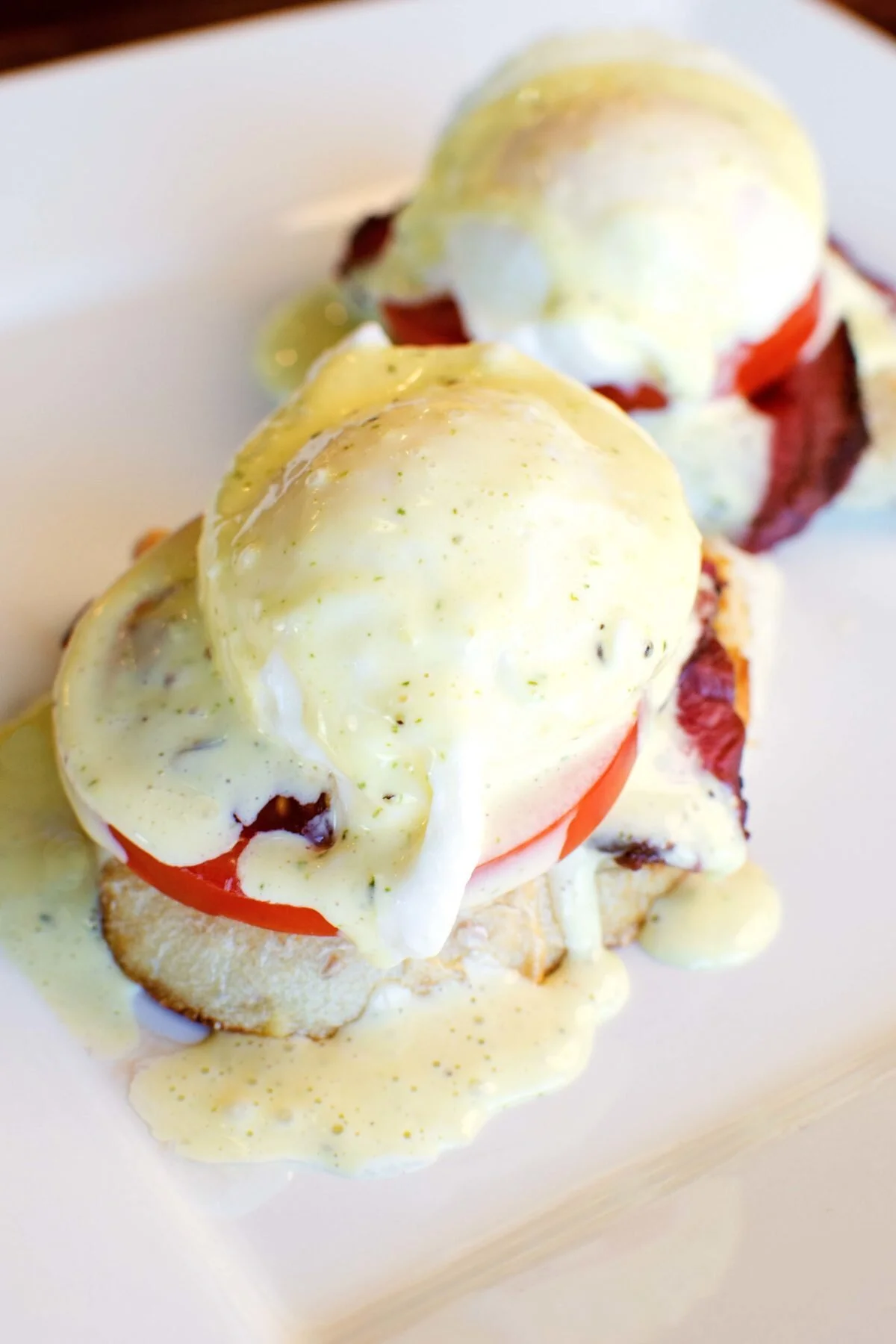
This past weekend, I awoke for my late Saturday morning breakfast, still in my pajamas, and decided it was time to try out a new wild game breakfast item.   I thought about how to best add wild game to the meal without getting too strange, and decided on taking one of my favorite classics and putting a wild game spin to it: the deer eggs benedict.

First popularized in New York, eggs benedict is a savory breakfast dish composed of a toasted English muffin topped with Canadian ham or bacon, a poached egg, and creamy Hollandaise sauce.  Many variations of the dish exist, including substituting the Hollandaise sauce for a Béarnaise sauce, and switching the ham for salmon, steak or chorizo, adding spinach, tomatoes, or avocado.  The meal base eggs benedict creates is a wonderful starting part for experimenting, especially when it comes to adding in some wild game.

Eggs benedict is the perfect lazy Saturday meal.  It is not a particularly difficult meal to pull together, but it does require a bit of time.  And honestly, it also makes quite the kitchen mess with the necessity for so many pots, pans, and utensils.  But that is what makes it the perfect Saturday breakfast, as there will be plenty of time to clean-up after this meal is shared, bellies are full, and maybe an early afternoon nap happens.

To start, pre-heat a skillet over medium-high heat.  Season your deer steaks liberally with salt and pepper.  Compared to beef, deer is a very lean meat, and when steaks are cooked to medium or well-done the texture tends to become very rubbery and chewy, for this reason,  I recommend eating deer rare or medium-rare.   For this benedict breakfast, I used deer tenderloin steaks that were about an inch and half thick., so I cooked each side for about four minutes and then tented the steaks under aluminum foil.  When you are ready to slice the meat, work across the grain and make about quarter to half inch slices.

DeerEggsBenedictMeatCut-1200x795.jpg
DeerEggsBenedictMeatCooked-1200x800 (1).jpg

While the steaks are resting, prepare the béarnaise sauce.  Traditionally, eggs benedict is served drizzled in Hollandaise sauce.  I switched the Hollandaise for Béarnaise in the this recipe.  Hollandaise and Béarnaise are both quite similar, as both are lusciously rich and creamy sauces with a cheerful yellow color.  The preparation base is the same for both sauces: eggs yolks emulsified in warm, melted butter and a hit of acid.  Where the sauces differ is the type of acid used and the addition of flavors.  Hollandaise gets it acid from lemon juice, and a slight heat is typically enhanced in the sauce with the addition of white pepper or cayenne.  Béarnaise sauce gets is acid from white wine vinegar, and it's flavor profile is further developed with the addition of fresh herbs and shallots.  I love the combination of the lightly licorice flavored tarragon herb with deer, so I decided to make a tarragon béarnaise for this eggs benedict.

DeerEggsBenedictSteakCuts-1200x1800 (1).jpg

To create the Béarnaise sauce, melt two sticks of unsalted butter, or 1 cup.  Let the butter cool just slightly.  You want it to be warm enough to emulsify the egg yolks, but you don't want it so hot that it actually cooks the egg yolks, which will result in a lumpy sauce.  Add egg yolks and the white wine vinegar to a blender and turn the blender on a medium speed.  Once the yolks are broken up and mixed a bit, slowly start drizzling in the warm butter.  As the butter and eggs start working together, the sauce should thicken.  Once all the butter is added, drop in the shallots, minced tarragon, and season with salt and pepper.  Let everything blend for a few more seconds.  I leave the sauce in the blender after I have prepared it, this way it will stay warm.

After the steaks are cooked and the Béarnaise sauce is ready, it is time to poach the eggs.  There are several egg poaching techniques out there.  Some people add vinegar to the water, other people poach in a shallow pan of water, and some even use a giant pot of boiling water.  The technique I am sharing is the easiest for me.  In a large pot, bring about five to six cups of water to a gentle boil.  Have your eggs broken into separate bowls or ramekins in preparation for addition to the boiling pot.  Using a large wooden spoon, create a whirlpool in the pot.  Drop the eggs one at time into the swirling water, and watch as the eggs fall apart and then, almost magically, start to pull together into perfectly poached eggs.  Allow the eggs to cook in the water for two and half minutes before removing with a slotted spoon.

Okay, after all that mess making, it is time to assemble the benedicts!  Toast a slice of sourdough bread and brush on a little butter.  To the buttered bread, add a thick, juicy slice of beefsteak tomato.  Top that with two or three thin slices of the deer steak.  Carefully balance the poached egg on top of the stack, and finally drizzle on a healthy pour of the Béarnaise sauce.

I love a beautifully cooked deer steak served with a side of potatoes or asparagus, but this deer eggs benedict really opened my eyes to all the possibilities of working with wild game.  Breakfast can be more than steak and eggs or breakfast burritos.  This meal is creamy and savory, with a hint of tartness, and even a little sweet from the tomato.  It makes for a great lazy Saturday breakfast that is sure to impress all your diners.  And it is pretty great for the chef as well!

Happy Hunting!

Farmhouse Turkey Burger

Farmhouse Turkey Burger

Enjoy this burger filled with everything off the farm: wild turkey and bacon, a fried egg, greens, and creamy gorgonzola.

Elk Guinness Hand Pies

Elk Guinness Hand Pies

Enjoy the tastes of St. Patrick’s Day in the palm of your hand! These ground elk Guinness handpies combine all the traditional flavors of corned beef and cabbage in a flaky, buttery crust.

Dove Poppers

Dove Poppers

What’s better than a jalapeno popper? How about a dove jalapeno popper! Dove breasts are stuffed with peppers and onions and wrapped in bacon.

Seared Deer Steaks in a Cilantro, Lime, Jalapeno Sauce

Living in the middle of a desert, seafood isn't always the best choice.  Anytime I order fish or other seafood from a restaurant, I can almost taste the freezer burn.  I can actually see it on the crab legs when I am at the grocery store. Don't get me wrong, I still buy those crab legs and cook them up as a special treat every once in awhile, but I am still saying that in the middle of the desert, seafood is not like seafood you get other places.

That being said, oddly enough our little town has a sushi restaurant.  If you had opened up a sushi restaurant in this simple little uranium mining town thirty years ago, you would have been laughed out of town.  And most likely gone bankrupt, because I can't imagine the tables would have been full.  However, as the town has blossomed, or actually a better word is probably exploded, into a tourist destination quickly over the last ten years, the cuisine has evolved.  There are several Thai restaurants, a handful of Mexican places, and even this sushi restaurant.

Anyway, for being a sushi restaurant sitting in a barren dust bowl of red blow sand, cactus, and sweltering heat, it is actually pretty good.  The fish is flown in daily from Hawaii, and they try to source local ingredients for the rest of their ingredients, such as vegetables and fruits.  I think the local produce is part of what appeals to me when I dine at the sushi place, and in particular I like their La Sal Roll.  Named after the mountains to the west of the town, the La Sal Roll is a salmon based roll with asparagus, lime, cucumber, and avocado.  The roll has a refreshing bite from the lime and cucumber, but is also hearty from the avocado.

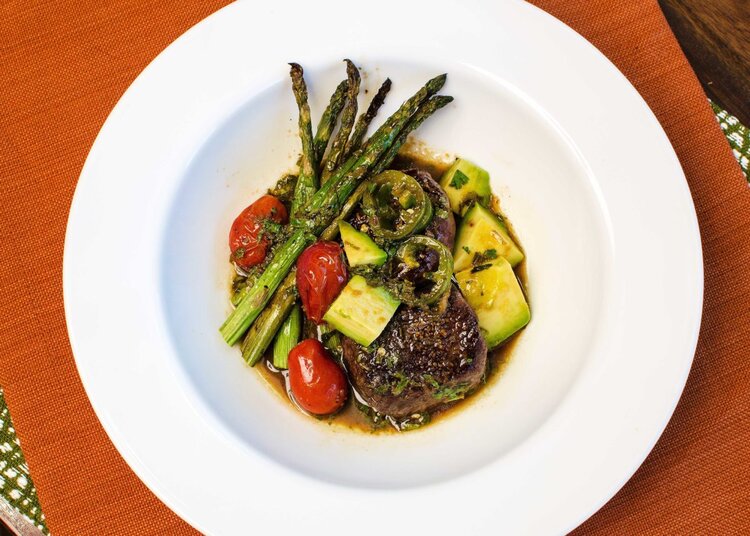
This roll is the inspiration for this deer steak dish.  With summer dragging in an extra long heat wave this year, eating has been...challenging.  It feels so hot that steak sounds awful.  But it is also summer, the season of grilling, which makes steak sound appealing.  It's a confusing state to live in.  This deer steak is a great compromise.  It takes the refreshing flavors of lime and cilantro and pairs it with the kick of jalapenos, creamy avocados, and a bit of spicy ginger.

"People get a little bolder and more wild in summer. You've got things going on kabobs, things cooking on the bone. There's something about standing over a grill or outside with the family that inspires us." ~Guy Fieri

"People get a little bolder and more wild in summer. You've got things going on kabobs, things cooking on the bone. There's something about standing over a grill or outside with the family that inspires us." ~Guy Fieri

DeerMedallionsSteaks-1200x795.jpg

For the steaks, I used deer backstrap and cut it into four medallions about three inches thick.  It would also work great with tenderloin or another steak cut.  Another substitution would be to use elk, moose, or pronghorn. I think this sauce would pair great with any of those steaks.  Let the steaks rest at room temperature for ten to fifteen minutes.  Then season them liberally with salt and pepper.

DeerMedallionsSides-1200x1812.jpg

While the steaks are resting, preheat the oven to 400 degrees.  On a rimmed cookie sheet or in a roasting pan, place some cherry tomatoes and asparagus.  I usually do four to five cherry tomatoes and half a bundle of asparagus per person.  Drizzle a little olive oil over everything, season with salt and pepper, give everything a quick mix using your hands, and throw those puppies in the oven.  They should take about twelve to fifteen minutes to cook.  You will know they are ready with the tomatoes are just starting to burst.

Next, prepare the sauce.  To a large bowl, add two big handfuls of cilantro, just torn with your hands into chunks, one jalapeno sliced into rings (if you aren't a fan of spicy, remove the seeds before you slice up the pepper), two teaspoons of grated fresh ginger root (which I suggest purchasing a microplane to use.  They are the best, and can be used on cheese, garlic, nutmeg, or for zesting fruit), two cloves of garlic (which can also be grated on the microplane!), the juice of three limes, and four tablespoons of coconut aminos.  I like to use coconut aminos for this recipe because it adds that salty soy sauce taste, but it also adds a hint of sweetness.  If you don't have coconut aminos you can always just substitute in soy sauce or tamari.  Whisk everything together and set aside.

DeerMedallionsIngredientsSauce-1200x857.jpg
DeerMedallionsGrater-1200x1680.jpg
DeerMedallionsSauce-1200x857.jpg
DeerMedallionsSteaksCooking-1200x1812.jpg

To cook the steaks, heat a skillet over medium high heat.  Wait until the pan is good and hot before adding the steaks.  This will create a really nice crust to the steaks.  I like to actually time my steaks when cooking them.  Since these steaks were fairly thick, I let them go for three minutes per side, for a total of six minutes cooking time.  That resulted in a medium rare steak.  If you are more of a medium person, add a minute.  More of a rare person?  Subtract a minute.  If your steaks are thinner than three inches, subtract a minute.

Once you have cooked both sides, it is time to add the sauce.  Leave the pan on medium high heat and slowly drizzly the sauce into the pan and over the steaks.  The pan should be hot enough when the sauce hits the pan, it sizzles.  You are almost caramelizing the sauce for a minute.  Let it bubble around the steaks for about thirty seconds and then turn the heat off.  Let the pan sit while you prepare the plates.

deermedallionssteakandsauce-1200x795.jpg

For plate preparation, dice up half an avocado per person.  Make the pieces bite size chunks.  Lay two medallions onto each plate.  Place the roasted cherry tomatoes, asparagus, and avocado around the steak.  Pour the sauce over everything and garnish with a little fresh cilantro.

So, if you are looking for fresh twist on steak, give this recipe a try.  I love the heat you get from the jalapenos, the spicy little kick of the ginger, and the sweet hints from coconut aminos.  Enjoy!

Happy Hunting!

Yield: 4
Author: a 12 Gauge Girl
Deer Steaks in Cilantro, Lime, Jalapeno Sauce

Deer Steaks in Cilantro, Lime, Jalapeno Sauce

Perfectly seared deer backstrap drowning in a sweet and spicy cilantro and jalapeno sauce with a kick of lime.
Prep time: 10 MinCook time: 20 MinTotal time: 30 Min

Ingredients

  • 4 deer steak medallions cut about three inches thick (or elk, pronghorn, moose, etc)
  • Salt and Pepper
  • 1 Cup chopped cilantro
  • 1 Jalapeno, sliced into rings
  • 2 Teaspoons fresh grated ginger
  • 2 Cloves garlic, minced
  • Juice of two limes
  • 4 Tablespoons coconut aminos
  • 2 avocados
  • Cherry tomatoes
  • Asparagus
  • 2 Tablespoons olive oil

Instructions

  1. Preheat oven to 400 degrees
  2. Place cherry tomatoes and asparagus on a baking sheet (lined with aluminum foil for easy clean-up). Drizzle with olive oil and season with salt and pepper. 
  3. Roast in oven for 12-15 minutes until the cherry tomatoes start to burst.
  4. Prepare the cilantro jalapeno sauce in a large bowl. 
  5. Add chopped cilantro, diced jalapenos, two teaspoons fresh grated ginger, the juice of two limes, and four tablespoons of coconut aminos to the bowl. Stir and set aside. 
  6. Let steaks come to room temperature for 10-15 minutes before cooking.
  7. Heat medium skillet over high heat. Cook steaks three minutes per side for medium rare.
  8. Once steaks are cooked to liking, pour the cilantro jalapeno sauce into the hot pan around the steaks.  Allow to cook for one minute.
  9. To plate, place a steak medallion on a plate. Top with half an avocado, roasted cherry tomatoes, and asparagus. Pour quarter of the cilantro jalapeno sauce over the entire plate.  Enjoy!

Wild Turkey Tagliatelle

Wild Turkey Tagliatelle

Wild Turkey is slow roasted and served over a bed of fettuccine and zoodles.

Duck Jalapeno Popper Quesadilla

Duck Jalapeno Popper Quesadilla

A fun twist the jalapeno popper, this quesadilla is stuffed with cheese, jalapenos, and wild duck breast.

Dutch Oven Biscuits and Gravy

Dutch Oven Biscuits and Gravy

This quick and easy dutch oven recipe for biscuits and gravy is perfect for whipping up in the backcountry. The silky and creamy gravy is bubbling over with chunky wild game sausage and bursts of pepper. Perfect for sharing around the morning campfire.

Salmon Recipe: Pecan Butter Crusted Salmon

Salmon Recipe: Pecan Butter Crusted Salmon

Salmon Recipe that is quick, easy, and simple for Pecan Butter Crusted Salmon. Crunchy roasted pecans in melted butter over beautiful salmon filets!

Elk Meatloaf Recipe: Onion, Mushroom, and Italian Cheese

Elk Meatloaf Recipe: Onion, Mushroom, and Italian Cheese

Elk Meatloaf Recipe Stuffed with Caramelized Onions, Portabella Mushrooms, and Cheese. The meatloaf is topped with a Thyme Mushroom and Onion Gravy.

Pheasant Carbonara: Creamy, Hearty, and Delicious!

Pheasant Carbonara: Creamy, Hearty, and Delicious!

A quick and easy recipe for creating a delicious pheasant carbonara from your wild harvested pheasant or other upland game bird!

Cajun Elk Sausage Hush Puppies

Cajun Elk Sausage Hush Puppies

Salty and savory little bites of fluffy fried dough filled with spicy Cajun seasoned elk sausage. Cajun elk sausage hushpuppies are a quick and easy appetizer, entree, or snack.

Ciopinno and Tarragon Pesto Kokanee Salmon Recipe

Ciopinno and Tarragon Pesto Kokanee Salmon Recipe

Combining the sweet and savory flavors of ciopinno stew with the minty and licorice taste of tarragon pesto, this Ciopinno and Tarragon Pesto Kokanee Salmon Recipe will make your mouth water for all the flavors.

Chipotle Pike Stew

Chipotle Pike Stew

The chipotles in adobo sauce add a spicy sweetness to this Chipotle Pike Stew. The stew has tomaotes, celery, onion, and of course chipotles and pike!

Basil, Fennel, and Rosemary Grilled Trout

Basil, Fennel, and Rosemary Grilled Trout

Topped with an anchovy butter and a bed of fresh herbs, this basil, fennel, and rosemary grilled trout recipe is perfect for cooking up all those summer rainbow trout catches.

Pheasant Groundnut Stew

Pheasant Groundnut Stew

Pheasant Groundnut Stew is a hearty, savory stew full of coriander, ginger, mace, and cayenne. Almond butter gives this wild game dish a silky texture.

Antelope Kabobs: Antelope, Cantaloupe, and Pumpkin Pie

Antelope Kabobs: Antelope, Cantaloupe, and Pumpkin Pie

Sweet marinated antelope kabobs are paired with fresh cantaloupe and onions. Finish the bite off with a pumpkin pie inspired dipping sauce.

Whiskey Rosemary Cream Sauce over Deer Steak and Mushrooms

Whiskey Rosemary Cream Sauce over Deer Steak and Mushrooms

Creamy whiskey and rosemary sauce tops seared elk or deer steak tenderloin and mushrooms.